
Resolution Copper Mine Promises To Boost America’s Energy Security

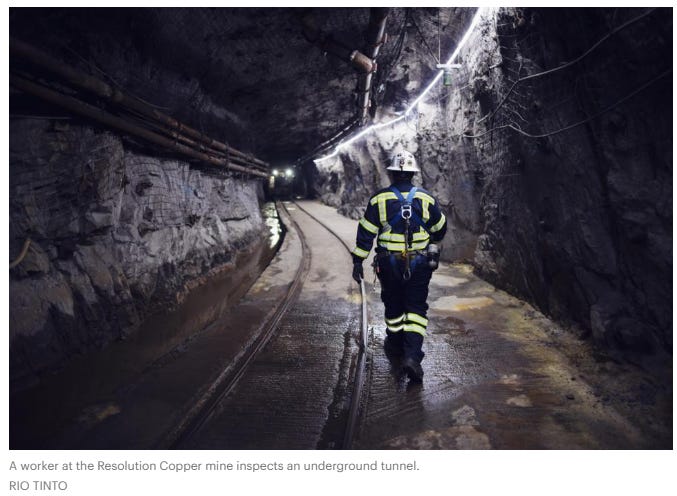
As artificial intelligence reshapes the global economy and electrification accelerates, copper’s status as the foundational metal of the 21st century becomes magnified. Demand is surging, yet domestic U.S. supply continues to lags after decades of stagnation. Resolution Copper - a joint project by major mining companies Rio Tinto and BHP - in Arizona offers a rare, high-impact solution: one of the world’s largest undeveloped copper deposits with the potential to deliver up to 25% of current U.S. copper needs while creating thousands of jobs and enhancing national security.
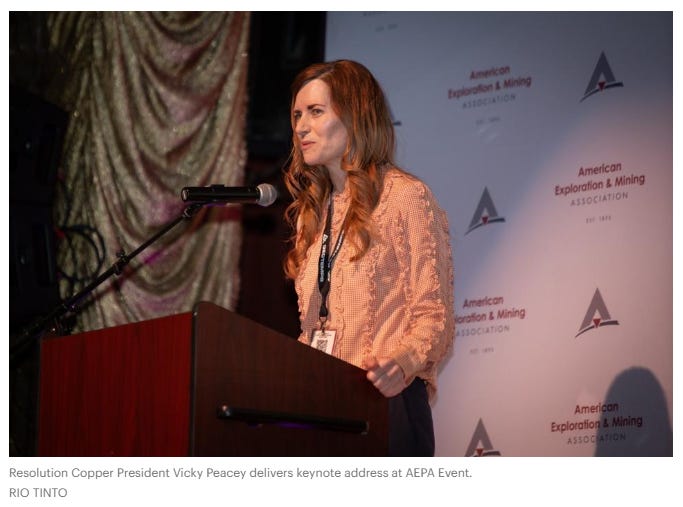
Vicky Peacey, President of Resolution Copper, captures the project’s strategic value, calling it “a rare combination of geology, location and national need. It is one of the largest undeveloped copper resources in the world, located in a historic mining district in Arizona.” Resolution is a brownfield redevelopment in the heart of Arizona’s Copper Triangle which is set to build on a century of responsible mining heritage.
Copper: An Economic and Strategic Imperative
At full production, Resolution could yield more than 40 billion pounds of copper over decades, along with critical co-products including molybdenum, silver, tellurium, indium, and bismuth. Economically, it promises to add roughly $1 billion to $1.2 billion annually to Arizona’s economy, supporting about 3,700 jobs with $270 million in combined annual compensation. Local hiring is already strong: approximately 90% of the current workforce lives within 40 miles of the site.
These figures matter in a region which has long served as a home to the mining industry. Over a 60-year lifespan, studies project up to $61 billion in total economic value for Arizona through wages, taxes, and local spending.
Global copper demand is projected to climb from around 28 million metric tons today to 42 million by 2040, a nearly 50% increase driven by demand from AI/data centers, electric vehicles, renewables, grid expansion, and defense needs.
