
Study Finds Additional $1 Trillion In Pipeline Capital Needs By 2052

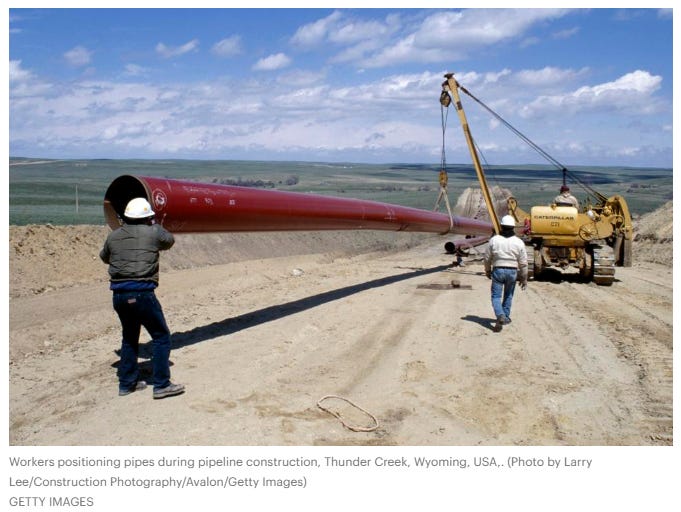
Just when you thought the trillions of dollars in new capital needed to upgrade things like the power grid’s generation and transmission systems in the coming decades was unimaginably daunting comes a new study which finds much more will be needed to build out new pipeline systems.
The Study, conducted by the INGAA Foundation, reveals the need for an eyewatering $1 trillion in capital for new pipeline infrastructure in the United States and Canada alone by 2052, an average of roughly $40-48 billion per year across the next 26 years.
Assessment Of Pipeline Needs For Multiple Fuels
Though the INGAA Foundation is an arm of the Interstate Natural Gas Association of America (INGAA), the study looks at pipeline needs for a variety of energy gases and liquids, including oil, hydrogen, carbon dioxide, and natural gas liquids in addition to raw natural gas streams. INGAA Foundation partnered with the University of Houston (UH), Wood, and ESMIA in the conduct of the study. The UH team, led by the Division of Energy and Innovation, with support from faculty and staff at the C.T. Bauer College of Business, played the lead role in the study, which also leveraged input from a variety of industry experts.
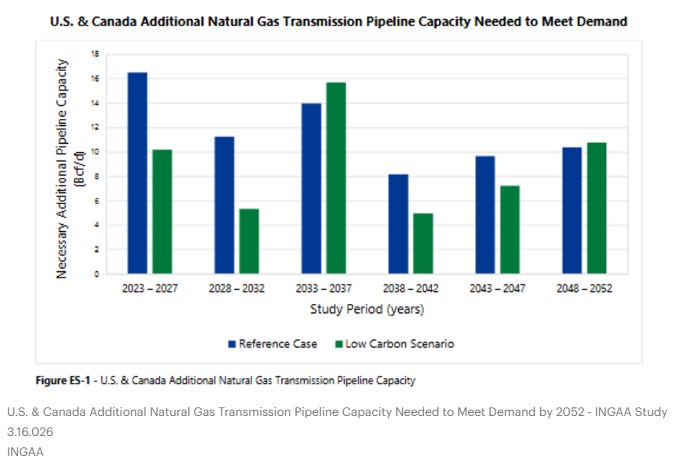
The study modeled outcomes based on two scenarios, a Reference Case reflecting current federal, state, and provincial policies as of April 1, 2025, and a Low Carbon Scenario which assumes more aggressive GHG reduction efforts in North America and globally.
