

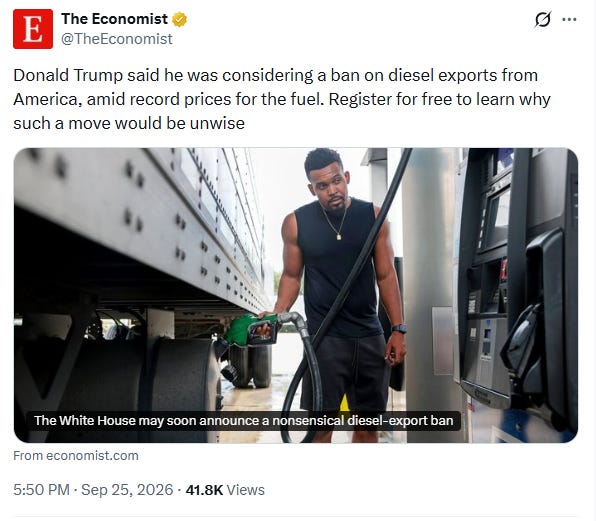
Energy analysts spent much of the past week laying out all the reasons why a presidential ban on exports of diesel fuel is a no good, terrible, very bad idea. As the Institute for Energy Research detailed on Thursday, such a ban would not only fail to lower diesel pump prices for any appreciable amount of time, it would also inevitably result in higher gasoline prices and supply shortages as refiners are forced to cut back runs because they have no outlet for the diesel volumes currently being exported to the global market.
Late in the week, we saw the emergence of an alternative proposal from politicians and industry critics: A temporary ban of “only” 90 days. This, they claim, would have the benefit of helping Republican candidates in their mid-term election campaigns while also allowing refiners to see a clear light at the end of the tunnel.
As a siren song it all sounds lovely. But in the real world, it’s also nonsense.
Whether we like it or not, capital does not care if some farmers in Iowa, Nebraska, and Texas might go under because diesel prices are too high. Capital does care about two hard factors: The anticipated rate of return on its investment, and the consistent application of U.S. laws and regulations.
A 90-day pause might as well be a permanent ban where capital deployment is concerned. It would send the signal to investors that the government, even in a Republican presidency, might step in at any time to do major damage to your rates of return.
